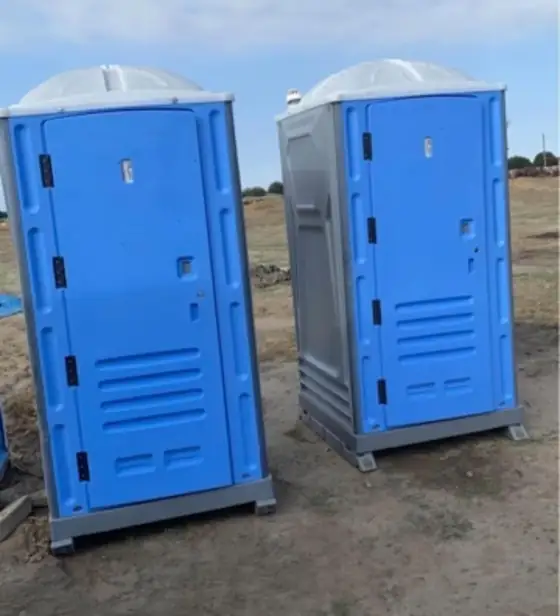
What are the OSHA porta potty requirements for construction?
OSHA porta potty requirements for construction come from 29 CFR 1926.51(c). A site with 20 or fewer workers needs at least 1 toilet. With more than 20, it needs 1 toilet seat and 1 urinal per 40 workers. With 200 or more, it needs 1 seat and 1 urinal per 50 workers.
| Number of employees | Minimum facilities (29 CFR 1926.51, Table D-1) |
|---|---|
| 20 or fewer | 1 |
| 20 or more | 1 toilet seat and 1 urinal per 40 workers |
| 200 or more | 1 toilet seat and 1 urinal per 50 workers |
The rule also says that under temporary field conditions, at least 1 toilet must be available. Job sites without a sewer can use chemical, recirculating, combustion toilets or privies, unless a local code bans them. A portable chemical toilet is the usual choice.
Read the full text in 29 CFR 1926.51 on eCFR. The table is a minimum. Crew size, shift length and service schedule decide what works day to day.
Does OSHA require hand-washing stations on job sites?
OSHA requires hand-washing facilities on construction sites under 29 CFR 1926.51(f). Lavatories must be made available, with hand soap and individual towels or air blowers. Workers who handle paint, coatings, herbicides, insecticides or other harmful contaminants need washing facilities near the worksite so they can remove those substances.
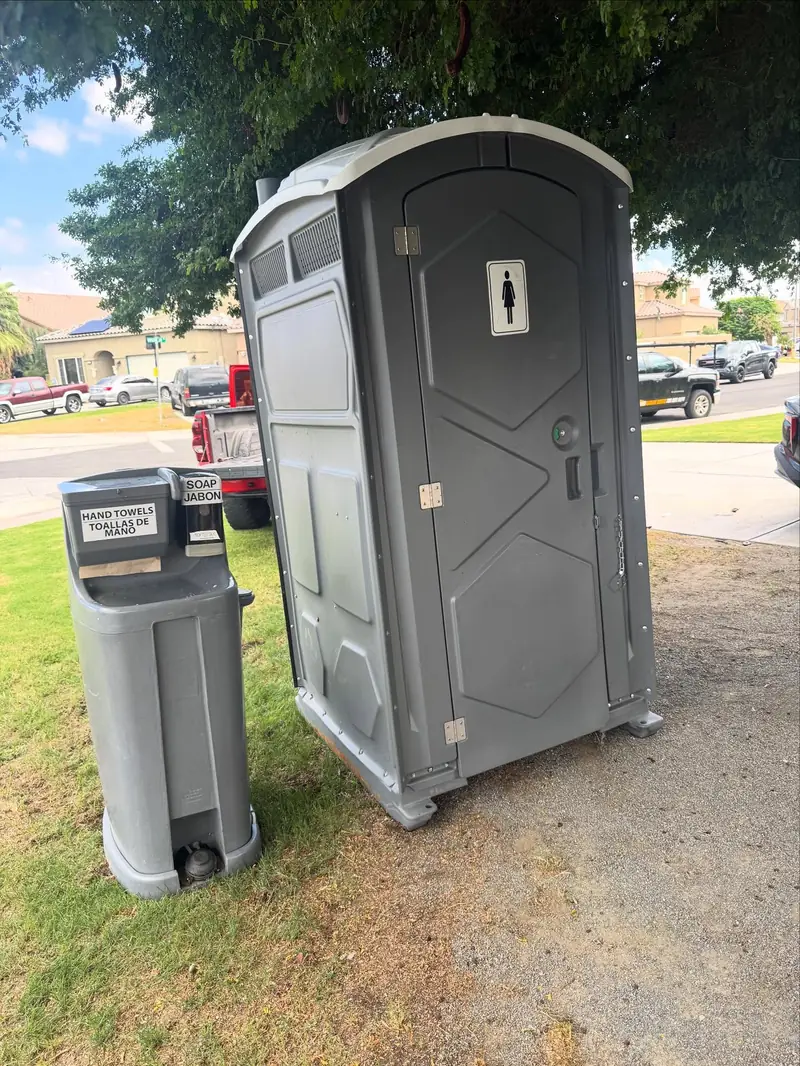
- (f)(1): washing facilities near the work when crews use paint, coatings, herbicides, insecticides or similar contaminants.
- (f)(2): washing facilities must be kept sanitary.
- (f)(3): lavatories in all places of employment, with soap and individual towels.
The rule also covers water type and exceptions for mobile crews. Read the full paragraph, then ask your OSHA area office how it applies to a site with no plumbing.
A 2-station hand-wash unit gives about 350 hand washes per fill and includes soap and paper towels. See hand-washing station rental for winter options.
What does OSHA require for shops, plants and offices?
OSHA's general industry rule, 29 CFR 1910.141, covers shops, plants, warehouses and offices. Table J-1 sets toilets by headcount. It calls for 1 toilet for 1 to 15 employees, 2 for 16 to 35, and 6 for 111 to 150. Over 150 employees, add 1 toilet for each extra 40.
| Number of employees | Minimum toilets (29 CFR 1910.141, Table J-1) |
|---|---|
| 1 to 15 | 1 |
| 16 to 35 | 2 |
| 36 to 55 | 3 |
| 56 to 80 | 4 |
| 81 to 110 | 5 |
| 111 to 150 | 6 |
| Over 150 | 1 more for each extra 40 employees |
This rule matters when a building loses its plumbing, or a crew works in a building with no restroom. Temporary units then fill the gap. Read 29 CFR 1910.141 on eCFR for the full text, including the mobile crew exception at (c)(1)(ii).
A long-term porta potty rental with weekly service covers a building that needs restrooms for months.
Need it delivered today?
Call before noon, Monday to Saturday, for same-day delivery.
What are the OSHA field sanitation rules for farms?
The OSHA field sanitation rule for farms is 29 CFR 1928.110. It applies when 11 or more employees do hand labor in the field. The farm must provide 1 toilet and 1 hand-washing facility per 20 employees, within a quarter-mile walk. Jobs of 3 hours or less, including travel, are exempt.
| Rule in 29 CFR 1928.110 | What it says |
|---|---|
| Who it covers | Farms with 11 or more employees doing hand labor in the field |
| How many | 1 toilet and 1 hand-washing facility per 20 employees or fraction |
| How close | Within a quarter-mile walk of each worker |
| Short jobs | Not required when the work, including travel, lasts 3 hours or less |
| Water | Potable drinking water must also be provided |
| Cost to workers | Provided at no cost to employees |
Orchards, nurseries and vegetable farms in Litchfield, Hartford and Tolland counties often move crews between fields. Units on firm ground near the field edge keep the walk short. Read 29 CFR 1928.110 on eCFR for the full text.
Do construction porta potties need to be wheelchair-accessible?
Construction porta potties used only by the crew do not need to be wheelchair-accessible. ADA section 203.2 says portable toilets used exclusively by construction personnel need not meet section 213 or sit on an accessible route. Units the public uses, like at events or open job trailers, are a different case.
For public events, ADA section 213.2 calls for at least 5 percent of clustered portable units to be accessible. In practice, that means at least 1 per cluster. Read ADA 203.2 and ADA 213.2 on the U.S. Access Board site.
A crew member who uses a wheelchair still needs a unit they can use. The wheelchair-accessible unit has a ground-level entry and a 32-inch door opening.
Which crews are exempt from OSHA toilet rules?
Mobile crews are exempt from OSHA toilet rules when they have transportation readily available to nearby toilets. Both 1926.51(c)(4) and 1910.141(c)(1)(ii) say this. A paving crew with a truck that moves through town often fits. A crew parked at one house for 3 weeks usually does not.
| Situation | What the rule says | Where |
|---|---|---|
| Mobile crews | Toilet rules do not apply when crews have transportation readily available to nearby toilets | 1926.51(c)(4); 1910.141(c)(1)(ii) |
| Construction-only toilets | Portable units used only by construction workers need not meet ADA section 213 | ADA 203.2 |
| Short farm jobs | No field toilet needed if work, including travel, is 3 hours or less | 1928.110 |
“Readily available” is the key phrase. If workers cannot get to a usable toilet quickly, the exemption may not fit. Ask the area office before you count on it.
What do OSHA inspectors look for in a job site porta potty?
OSHA inspectors usually check 4 things in a job site porta potty. They look for enough units, sanitary condition, nearby hand washing and a door that latches. A weekly-serviced unit with paper and sanitizer covers most of this. Overfull or unstocked units are a common problem.
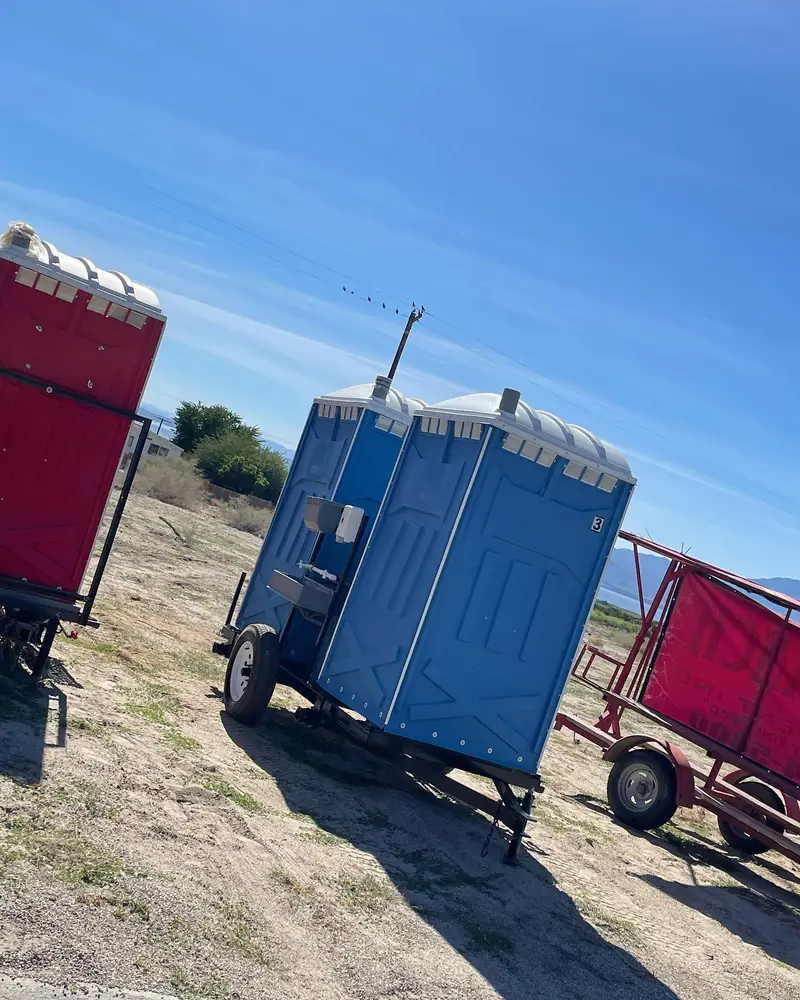
- Count: enough units for the crew per Table D-1, rounded up.
- Clean and stocked: pumped and restocked on schedule, with toilet paper.
- Hand washing: soap and water or a hand-wash station close by.
- Privacy: an occupancy latch that works.
- Access: a clear path, not blocked by materials or snow.
This is practical guidance, not legal advice. Connecticut private-sector job sites fall under federal OSHA, with area offices in Bridgeport and Hartford. CONN-OSHA covers state and town government workers. Find contact details in OSHA's office directory.
See construction porta potty rental for service schedules and how many porta potties you need for crew charts.