Where to Place a Porta Potty on Your Property
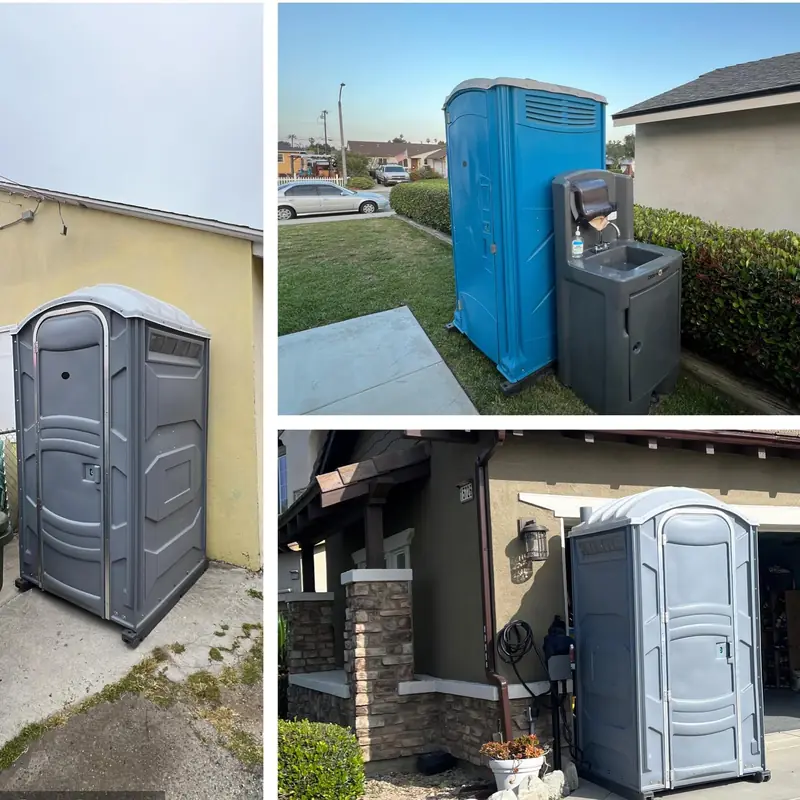
The best place for a porta potty is level, firm ground the delivery truck can reach. A standard unit is about 43.5 inches wide, so gates need about 48 inches. Keep the unit off septic covers, away from wells and steep slopes, with the door facing away from neighbors and the wind.
Picking the spot before delivery day saves time and avoids a second trip. This guide covers size, ground, truck access and the small details that make a unit easy to use.
How much space does a porta potty need?
A standard porta potty needs a spot about 4 feet wide and 4 feet deep, plus room for the door to swing open. The reference model is 91 inches tall, 43.5 inches wide and 47 inches deep. A wheelchair-accessible unit needs much more, at about 62 by 62 inches.
| Unit | H x W x D (inches) | Weight | Gate width needed |
|---|---|---|---|
| Standard porta potty | 91 x 43.5 x 47 | 165 lb | About 48 in |
| Deluxe flushing unit with sink | 91 x 47 x 48 | 243 lb | About 52 in |
| Wheelchair-accessible unit | 91 x 62 x 62 | 240 lb | About 66 in |
| Hand-wash station | 62 x 26.5 x 21.5 | 70 lb empty | About 32 in |
Sizes are for the reference models. Your unit may differ by an inch or two. Measure your gate and any tight spots before you book.
What kind of ground works for a porta potty?
A porta potty works on any level, firm ground, such as grass, gravel or pavement. The ground does not need to be perfectly flat, but a steep slope can tip the unit or make the door swing shut. Avoid soft mud, loose mulch beds and low spots where water collects after rain.
- Good: lawn, gravel pad, driveway, parking lot, packed dirt.
- Avoid: septic tank covers, leach fields, soft fill, steep slopes.
- Avoid: spots under low branches or overhead wires.
How close does the truck need to get?
The delivery and service truck needs to park close to the porta potty, because the unit is carried in and pumped with a hose. A clear path from the driveway or street works best. Tight gates, steps, fences and parked cars are the most common problems on delivery day, so plan around them.
- Measure every gate on the path: about 48 inches for a standard unit and about 66 inches for a wheelchair-accessible unit.
- Move cars, trailers and dumpsters out of the path the day before.
- Share any gate code or lock combination when you book.
- Point out low wires, soft lawns and narrow roads.
You do not need to be home on delivery day. Mark the spot with cones, tape or a flag, and the driver calls ahead before arrival.
Need it delivered today?
Call before noon, Monday to Saturday, for same-day delivery.
How far should a porta potty be from the house, septic and well?
A porta potty should sit close enough to the house that guests find it, but far enough for privacy. A spot 25 to 50 feet from a patio or back door works well for most yards. Never place a unit on a septic tank cover or leach field, and keep it well clear of a private well.
The weight of a full unit and the service truck can damage a septic system. Know where your tank and leach field are before delivery. The state CT DPH subsurface sewage program explains how home septic systems work.
For homes on a well and septic, a porta potty keeps party guests from overloading the system. That is a common reason for residential porta potty rental.
How do wind and lighting affect placement?
Wind and lighting both matter for a porta potty. A unit in an open or coastal spot can tip in strong wind, so ask to have it staked or anchored. For events after dark, place the unit near a light or add solar path lights. Guests need to see the path and the door at night.
- Face the door away from strong wind and from the neighbor's yard.
- Place the unit downwind of where people eat.
- Add a lantern or path lights for evening parties.
- Keep the path free of hoses, cords and tent stakes.
Where should a wheelchair-accessible unit go?
A wheelchair-accessible porta potty needs a firm, level route from where guests sit to the unit door. Grass works if it is dry and flat, but gravel and mulch can stop a wheelchair. The ADA 2010 Standards use a 60-inch diameter circle as the turning space inside, so the door needs clear room in front.
See the ADA turning space rule (304.3.1). If your unit sits near a street, read about porta potty permits in Connecticut first.