Winter Porta Potty Rental in Connecticut
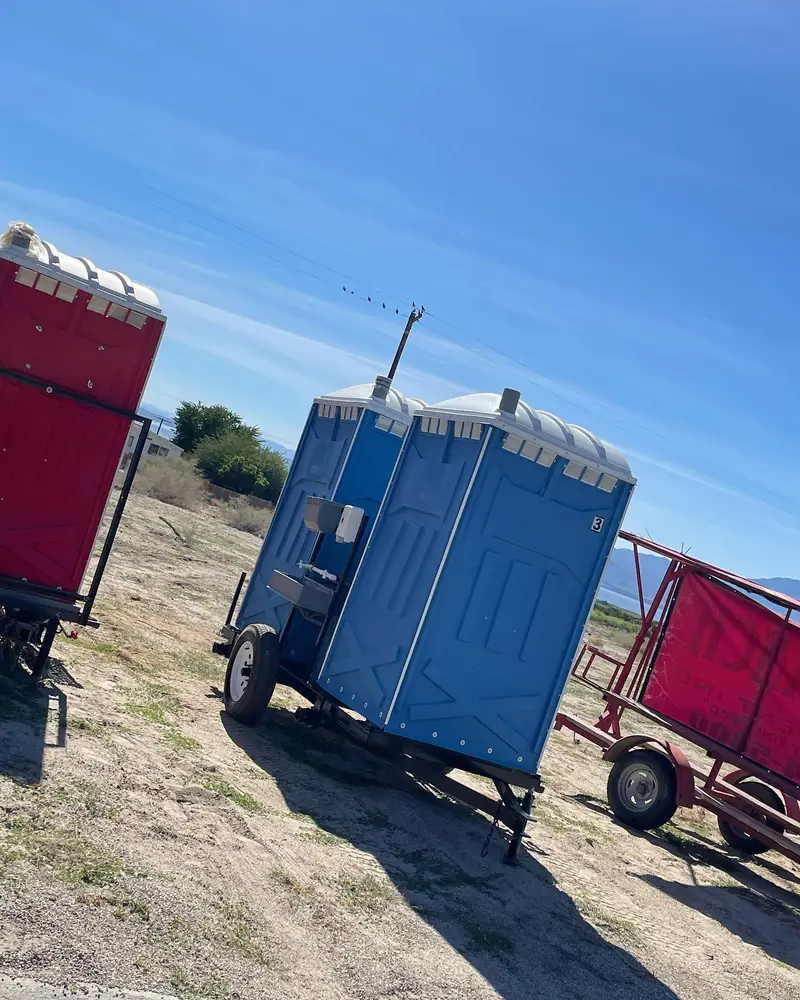
Winter porta potty rental in Connecticut works fine when you plan for cold. Holding tanks get winterized so waste does not freeze solid. Freshwater sinks and hand-wash stations can freeze from late October to early April, so use hand sanitizer or a heated station. Keep a clear, plowed path to the unit.
Job sites, home builds and winter events all still need a toilet. The cold changes a few details, not the basics. Here is what to plan for in Shelton and across Connecticut.
What happens to a porta potty in a Connecticut winter?
A porta potty in a Connecticut winter keeps working, but water inside it can freeze. The 60-gallon holding tank in a standard unit gets winterized so the contents stay liquid enough to pump. Anything that uses fresh water, such as a foot-pump sink or flush tank, is the part most likely to freeze.
A standard porta potty has no water lines, so it is the simplest winter choice. It has a toilet, urinal, toilet paper and hand sanitizer.
Units with a sink or flush, like the deluxe flushing unit with sink, use a fresh-water tank. That tank can freeze on a cold night. Ask about winter use before you book one for a December party.
When does freezing weather start in Shelton?
Freezing weather in Shelton usually starts with the first frost around October 21 to 31. The last frost usually comes around April 1 to 10. January is the coldest month, with an average low near 21°F. Plan winter setups for roughly November through March, with some cold nights on either side.
| Month | Average low in Shelton | What it means for your unit |
|---|---|---|
| December | About 26°F | Fresh water freezes most nights |
| January | About 21°F | Coldest month; tanks need winterizing |
| February | About 22°F | Snow and ice around the unit |
| March | About 29°F | Freeze-thaw; watch for mud and ice |
Hilltop spots in White Hills and Long Hill can run a few degrees colder than downtown along the Housatonic. Wind makes it feel colder at the door, too.
Do hand-wash stations work in winter?
A standard hand-wash station holds 22 gallons of fresh water, and that water can freeze below 32°F. For winter jobs, most people switch to hand sanitizer inside each unit. A heated hand-wash station is the other choice. A heated station needs a 110V outlet, about 13 amps, on a GFI circuit.
Construction crews still need a way to wash up. OSHA rule 29 CFR 1926.51 covers toilets and washing facilities on job sites. Read the full breakdown in our OSHA porta potty requirements guide.
If you have power on site, a heated hand-wash station rental gives warm water all winter. Without power, sanitizer is the practical answer.
Need it delivered today?
Call before noon, Monday to Saturday, for same-day delivery.
How does snow affect delivery and service?
Snow affects porta potty delivery and service only when the truck cannot reach the unit. The service truck needs a plowed path close to the unit, and the door needs to open. After a big storm, clear a path from the driveway or road to the unit within a day so weekly service stays on schedule.
- Plow or shovel a path wide enough for a person with a hose, about 4 feet.
- Do not pile plowed snow against the unit or its door.
- Clear snow off the roof vent after heavy storms.
- Mark the unit with a tall flag so plows can see it.
- Call if a storm blocks access on your service day so the visit can move.
Where should a porta potty go in winter?
A porta potty in winter should go on level ground, out of the wind, and away from roof edges. Snow and ice slide off roofs and can hit or bury a unit. A spot with morning sun stays a little warmer. Ask to have the unit staked or anchored on open or windy sites.
Keep the unit near the work but off the path of plows and trucks. Avoid low spots where melt water pools and then freezes. The porta potty placement guide covers gate widths, ground and truck access in detail.
Winter rental checklist
A winter porta potty checklist has six parts: unit type, hand washing, power, access, placement and service. Settle these 6 items before the first freeze and the rental runs smoothly through March. Most winter problems come from blocked access after snow or frozen fresh water, and both are easy to prevent.
- Unit: standard units have no water to freeze.
- Hand washing: sanitizer, or a heated station if you have power.
- Power: a 110V GFI outlet for heated stations or a restroom trailer.
- Access: a plowed path the service truck can reach.
- Placement: level, out of the wind, away from roof drip lines.
- Service: weekly is standard; add visits for big crews.
Most winter rentals are on job sites. See construction porta potty rental for crews and monthly porta potty rental for sites that stay open all season.